





















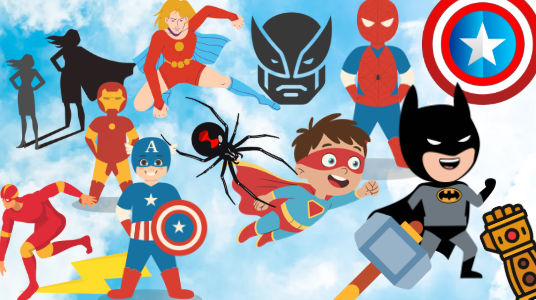
Superheroes seem to appear everywhere from graphic novels to movies but their major presence in media begs the question: Why are they so important?
A large reason why superheroes are so mainstream is that they are relatable. Superheroes reflect the best and worst parts of humans. They’re fantastical but also flawed. They show how even in our less-than-perfect world some people can still find a way to show kindness to everyone they meet.
Junior Jillian Walden said, “Superheroes show people that there is good in the world and it gives them something to look up to. Children are especially impressionable so it’s good to show them such good examples when they are young.”
Children absorb information from everything around them, from characters they see on television to the actions of the people that surround them. When children see how superheroes are treated when they show kindness and compassion, they realize how valuable those emotions are.
Superheroes can also be important because they reflect the state that the world is in. With human conflicts, war and simple human fears, superheroes face the problems of the world in a way that makes them feel more bearable in the real world.
Sophomore Katie Atkin said, “A lot of superhero stories show issues like corruption or prejudice, like Wonder Woman whose story takes place during the Nazi regime in the 1940s. Even though superheroes are fantasy, they still reflect the issues of the times that they are in.”
When superheroes appear in media, they help people understand what is happening around them and allow them to think about how those problems could be solved in the real world.
Ultimately, superheroes are important to media because they combine human struggle with hope. People like superheroes not just because they feel mystical and otherworldly, but because they are flawed.
It is these complex feelings that superheroes evoke that have allowed them to reign over media for generations. As long as people continue to look for hope and role models in heroes, they will continue to remain an important part of media.