






































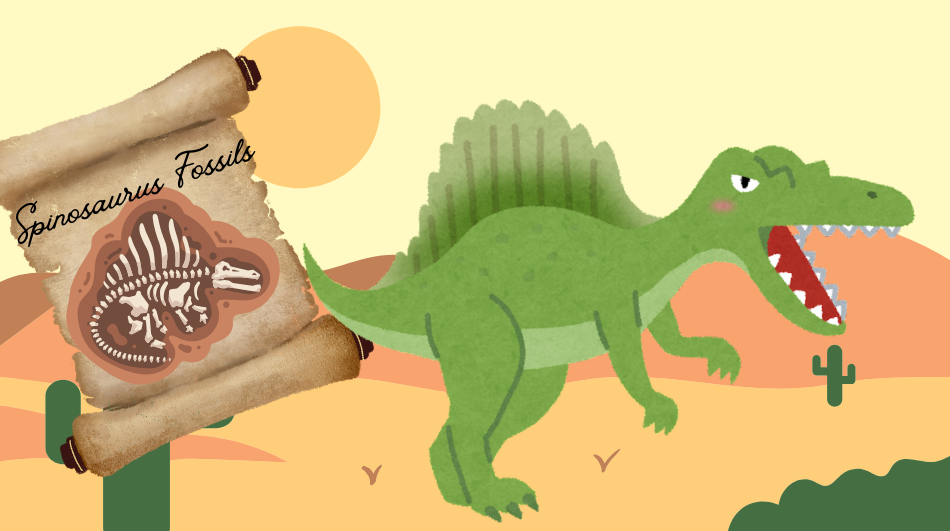
Fish-eating dinosaur Spinosaurus, also known as hell heron, fossils have been found in the Sahara desert. The fossils were discovered during an excavation by a team studying ancient rocks and dinosaur remains in North Africa. Researchers say the bones help confirm that Spinosaurus lived in river and wetland environments millions of years ago.
“The coolest thing I’ve learned about the new Spinosaurus is that other than the apparent physical differences between the previous and new species found, they say the horn may have been vibrant colors. They speculate this from seeing the different texture in the horn fossils and overall build. I just think it’s cool that even now in our time we’re still finding out new details about dinosaurs just from specific features of their fossils,” said junior Bianca Hernandez Garcia.
The fossils were uncovered in areas of modern-day Morocco and nearby regions where many Spinosaurus bones have been found over the years. Scientists discovered parts of the tail, vertebrae and other bones that match known fossils of Spinosaurus. These remains add to the growing evidence that the dinosaur had strong swimming abilities and spent much of its time in water.
Researchers say that the fossils are about 95 million years old, from a time known as the Cretaceous period. During this time, the Sahara was not a desert but a large river system filled with fish, plants and other animals. This environment would have provided plenty of food for a giant species like Spinosaurus.
“I believe they are pretty cool species and help us understand how ancestry works,” said sophomore Sonal Ravva.
Spinosaurus is believed to be one of the largest meat-eating dinosaurs ever discovered, possibly even larger than Tyrannosaurus rex. It had a long snout like a crocodile, cone shaped teeth and a large sail on its back. Scientists believe these features helped it hunt fish and move through water more easily than any other large dinosaurs.
Recent studies of tail fossils have shown that Spinosaurus had a paddle-like tail, which likely helped it swim. This supports the idea that it was one of the first known dinosaurs adapted for a semi-aquatic lifestyle. The new fossils help confirm these earlier findings and give scientists a clearer picture of how the dinosaur moved and hunted.
Scientists will continue to study the fossils and learn more about how the Spinosaurus lived and how it compared to other predators of its time. Researchers often compare new bones with fossils stored in museums to confirm details about size, movement and behavior. Each new discovery helps fill gaps in the fossil records.
Experts say fossil discoveries like this are important because they help explain how life on Earth changed over millions of years. By studying ancient animals and their environment, scientists can better understand evolution and how different species adapted to survive.
“It’s a good thing in a way. We get to know more about our past. The things that have happened before us, the more we find out the more we have a chance to find out more answers we have questions about,” said sophomore Diya Krishnan Karthikeyan.
The discovery also shows that there is still much more to learn about dinosaurs, even after decades of research. New technology and continued fieldwork are helping scientists uncover more fossils every year. As more discoveries are made, researchers hope to learn even more about how Spinosaurus lived in ancient river systems across North Africa.