




































College football has a unique history of interesting jerseys and “creative” uniform combinations. Whether it is the 2017 Florida Gator Skin design or the classic 100 year old Michigan uniform, college football fans have been treated to an assortment of new styles, but this tradition of change raises a simple question: are these new uniforms always needed or does classic conquer all?
Like the aforementioned Florida Gator Skin uniforms, there have been many misses in college football uniform design history. The biggest of which, though, are the Gator Skins.
Back in 2017, the University of Florida wanted to commemorate the 25th anniversary of their stadium, “The Swamp.”
To do this they decided to dress up their football players as alligators. These uniforms had dark green scales, bright orange and blue numbers and a blacked out helmet that simply did not match the rest of the jersey. Obviously UF fans did not like this uniform decision.
“These were the worst uniforms in the history of western civilization,” said FootballScoop writer Zach Barnet, back in 2017.
It seems that green jerseys might just be hard to master, as Michigan St., Eastern Michigan, Oregon and USF have all landed green jerseys in the history of bad jerseys that were intended to be new or modern redesigns of their traditional jerseys that looked just fine.
Despite several poorly executed redesigns and alternates, new jersey designs have been successful and looked better than some traditional uniforms. The poster boy of alternate uniforms is obviously the Oregon Ducks.
In the past season, Oregon used a different uniform combination for every game. While yes they have had a few misfires (namely their attempts at highlighter yellow uniforms in 1999, 2006, 2013 and 2024), this year’s jerseys rivaled the quality of some of the best classic uniforms out there, and proved that green uniforms can be done.
Traditional uniforms always have and always will look good, that’s why they’ve lasted long enough to become classic uniforms. The standouts of this type of uniform are older programs mainly from the SEC and Big 10, like Alabama, Penn State, Nebraska and Michigan.
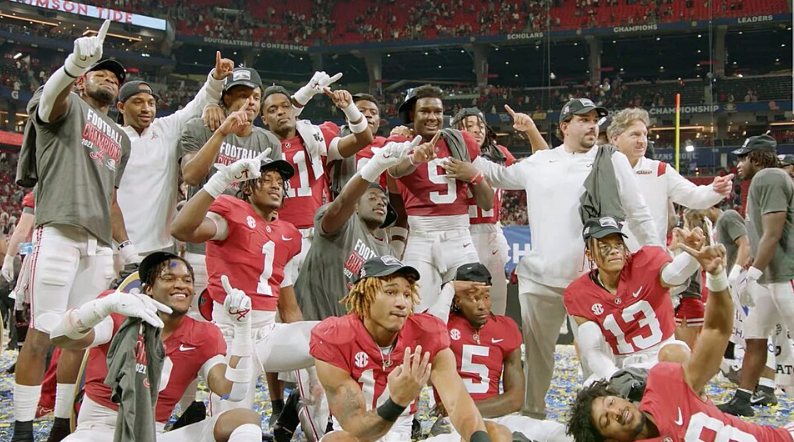
Alabama’s uniform, for example, has not really changed since 1964, and the same basic design motifs can be seen all the way back to their 1941 jerseys when the Crimson Tide were still wearing leather helmets.
“Everybody has an idea of what Alabama football players are supposed to look like when they come out of the tunnel in terms of the uniform that they wore and the uniform that we wear. That’s not a tradition that I think anybody has a right to mess with,” said legendary Alabama head coach Nick Saban on a 2015 radio show.
Michigan has been using the same combination of blue, yellow and white since their 1928 season showing that even traditional jerseys can have a little flair, as they wear combinations of blue or yellow pants with blue, white or yellow jerseys. The most iconic part of their uniforms came in 1937 when the Wolverines started using the blue and yellow winged helmets.
The difference between traditional and modern jersey design really comes down to the program; do they want their uniforms to show that they are a good team, or do they want their players’ performance to show that for them. Additionally, fans of modern jerseys have to accept the fact that each new uniform is a gamble on if it will actually look decent or only look good in posters and drawing boards.
At the end of the day the stability and recognizability of traditional uniforms give them the edge in this debate. As much as the hit modern jerseys look incredible, the misses are just too bad and numerous to justify the gamble. Traditional uniforms have the history to back up their quality designs; they got it right the first time and don’t need to mess with it every week.