












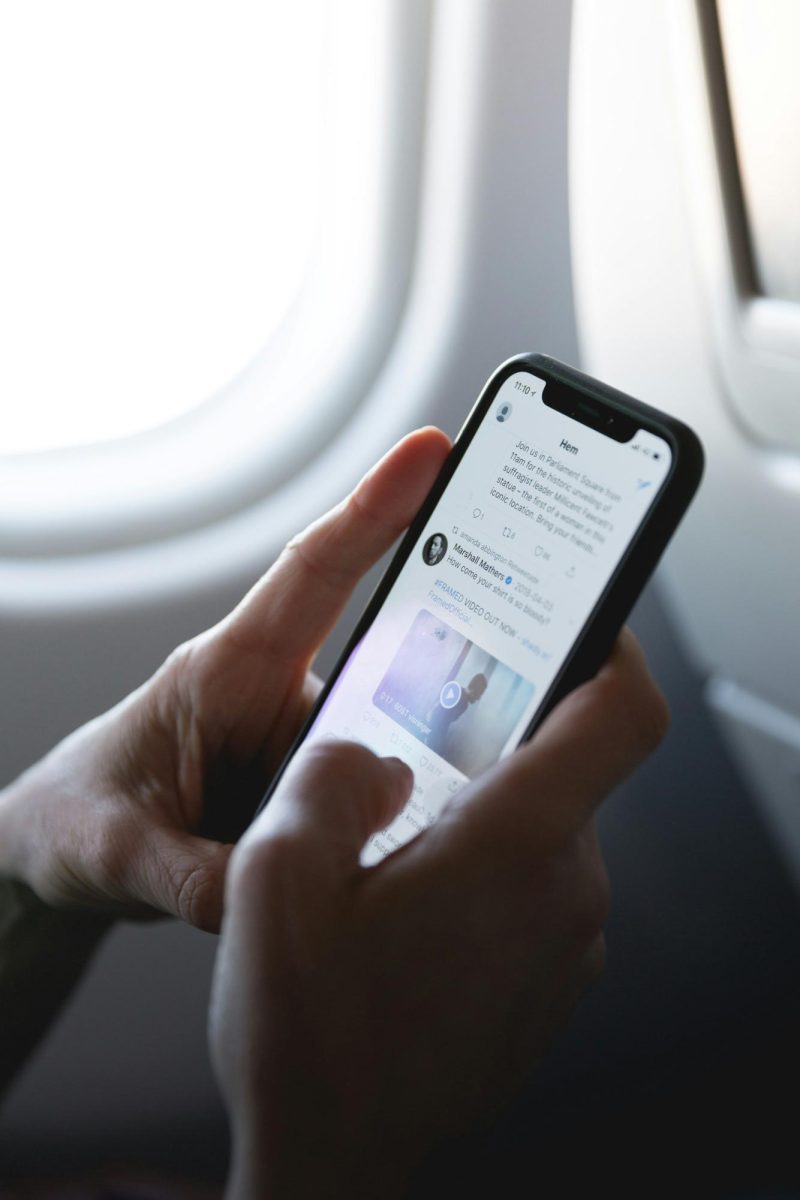
Picture this: you’re a businessman living in the UK and you have an upcoming conference in the US. You go to make a request to travel to the US through the Electronic System for Travel Authorization (ESTA) when you see an update to the system’s requirements: prospective visitors to the US must disclose the past five years of their social media activity.
Sounds pretty dystopian, right? I mean, in what world would you need your Facebook and Pinterest accounts screened before visiting another country? Well, in accordance with recent policy aimed at limiting foreign presence in the US, President Donald Trump has proposed that social media screenings, amongst a slew of other new regulations, should be implemented for tourists.
On Jan. 20, 2025, Trump issued Executive Order 14161, a broad announcement stating his intent to more heavily regulate foreign entry into the US in an attempt to combat terrorism and the spread of anti-American sentiment. Within this proclamation Trump explained, “…the United States must be vigilant during the visa-issuance process to ensure that those aliens approved for admission into the United States do not intend to harm Americans or our national interests.” While the public initially believed this crack-down to be angled toward those seeking an immigrant visa, we are now seeing it applied to all foreigners seeking to enter America, no matter how brief their stay.
In a broad lens this decision may make sense. I mean, who wouldn’t want to run background checks on someone that could potentially be dangerous? However, using something as fluid and up to interpretation as social media to assess someone’s threat potential is neither the most efficient nor the most accurate way to screen someone. Add to this the fact that the platform(s) used to screen these individuals’ social media accounts are automated analytical tools and algorithms powered by AI, and it’s clear that this system is rife for misinterpretation.
Aside from concerns over unreliability, this regulation also stands against certain unalienable rights given to US citizens and persons in accordance with the US Constitution. The Bill of Rights applies to US citizens, yes, but it also extends to a degree to all persons on US soil. This means that tourists, businessmen and more coming from foreign countries still have their right to freedom of speech, press and privacy, and this new regulation may pressure individuals to self-censor or avoid expressing opinions online out of fear of being denied entry. As explained by the US Federal Court, freedom of speech includes the right “to use certain offensive words and phrases to convey political messages,” a precedent set by the Supreme Court case Cohen v. California.
Many may see this as a necessary evil. I mean, social media platforms are largely public, so what harm could be done if it’s a government program scanning through your profiles as opposed to a friend or family member? However, we should also stop and consider what might happen when context is lost, privacy is violated and fear and uncertainty turn what were once routine travel applications into digital gambles.