

































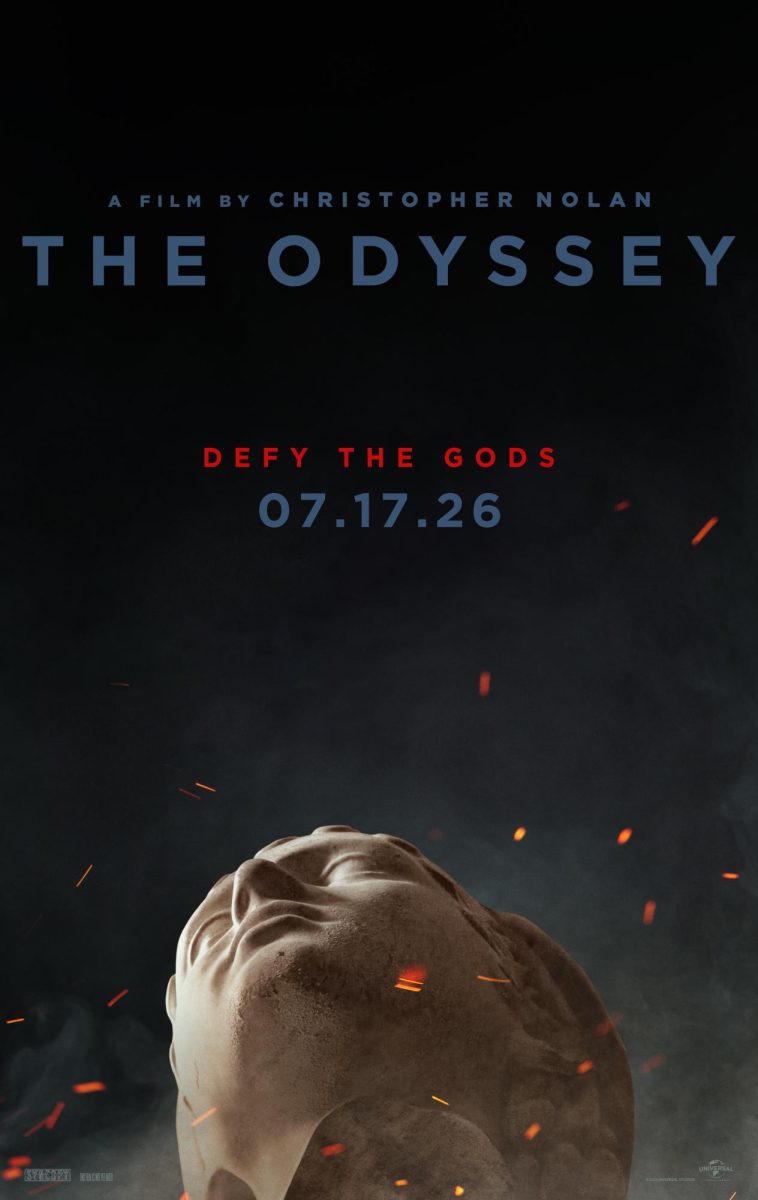
Christopher Nolan’s highly anticipated movie, “The Odyssey,” is coming to theaters July 17, 2026. Film and Greek mythology enthusiasts alike are thrilled for this adaption of Homer’s story, but many critique the trailer for its historical inaccuracies while others are simply just there for a good story. Retelling a classic story for a new generation is a common method for continuing a legacy of entertainment.
The original story is told from the perspective of Odysseus, who embarks on a 10-year journey after the Trojan War to get back to his wife and son, Penelope and Telemachus. On this journey he faces many obstacles, like monsters and gods, who try to kill him. The story of the Odyssey has been told and interpreted for 2,700 years and continues to inspire artists today, highlighting the significance of this story to western culture.
An element of the movie that many viewers do not care for is the historical inaccuracies. Some historians have already confirmed that, for example, the armor that the soldiers wear isn’t completely accurate to what the real Greeks would have worn. The armor in the film is very stylized and crafted almost to perfection, while in reality, the armor was less attractive and usually made of copper instead of metal.
On the other hand, many don’t mind its historical inaccuracies because the story is fictional anyway. Film critics and historians can make all the critiques they want about the production quality, but an audience will always know if a movie is entertaining or if it’s a flop based on how engaged with the story they are. Some even argue that movies are not meant to be completely accurate and that simply enjoying the experience of watching is enough.
Ultimately, the anticipation for this movie is exciting. The cast lineup has many talented and recognizable names as the confirmed leads, like Matt Damon and Tom Holland. The CGI effects seem high quality enough to make the environmental storytelling believable, and the story will forever be entertaining to westerners. “The Odyssey” is an epic that continues to inspire modern audiences and people across time.