Rapid scenes, bright colors and a constant stream of information thrown at children have become the new normal in entertainment. From fast-paced cartoons to short-form videos like YouTube Shorts, kids today are growing up in an overwhelming world with barely any time to process the content they indulge in. Upon walking into a restaurant or park, you might see an ‘iPad kid’ blasting nursery rhymes or videos from their mobile device. The term ‘iPad kid’ has become a widely adopted term used to describe young children who spend large amounts of time on screens for entertainment.
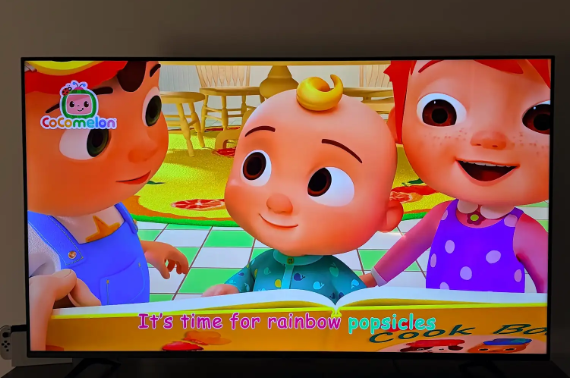
Many of today’s children’s shows are designed to capture attention as quickly as possible. Studies show that scenes in modern cartoons change every 5 to 11 seconds, which is too fast for children to process. This inherently acts as a ‘drug’ to young kids, making them unaware of their surroundings and hyper-focused on the screen. A popular example is Cocomelon, a YouTube Kids channel with over 200 million subscribers and a target audience of young children. Cocomelon uses bright visuals and rapid, repetitive scene changes to keep kids engaged.
Research suggests that watching fast-paced media can temporarily impair a child’s attention span or even slow their speech development.
According to the ScienceSurvey, “The attention span and level of self-control of the children who watched a fast-paced cartoon were significantly worse than those who watched an educational show or drew.”
When children are constantly watching overstimulating content, it may make reading, focusing, or classroom learning difficult. Since their brains are used to the quick words, colors, and images on the screen, it causes their attention to be easily diverted.
Experts also emphasize the importance of allowing children time away from constant stimulation.
According to behavioral specialist Zabina Bhasin, “Young children need their dose of boredom. It teaches them how to cope with frustration and control their impulses.” Bhasin’s explanation suggests that because of the overstimulation, a child’s imagination and reliance with one’s self may be hindered.
However, some researchers say not all fast-paced media is entirely harmful. Many children are able to adapt to the digital world and fast-moving environments. If used responsibly and in moderation, fast-paced educational programs can still support learning and engagement, helping young children learn more effectively and efficiently.
As children’s media continues to change, it is important to understand how it actually affects them. While fast-paced videos can be fun and educational, they can also impact a child’s attention span and development over time. It’s not necessarily about avoiding screens, but choosing to use them in moderation and finding a balance between them and everyday activities.