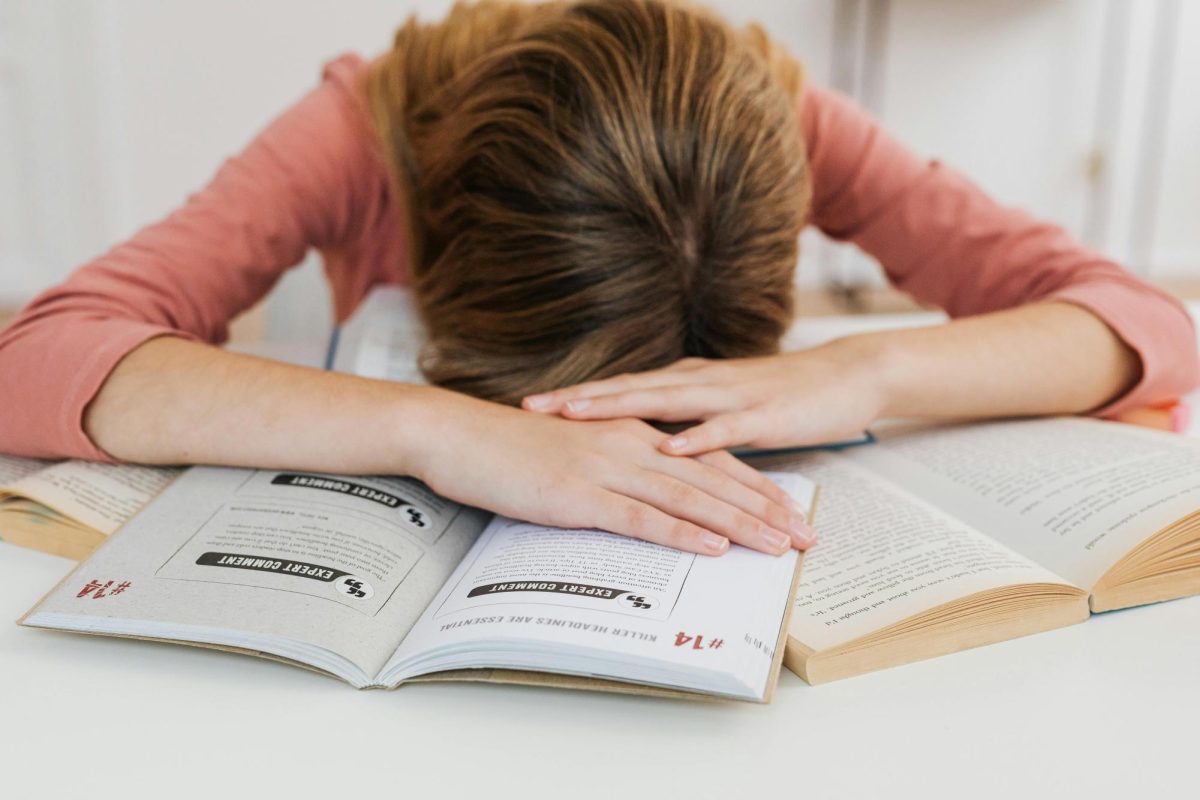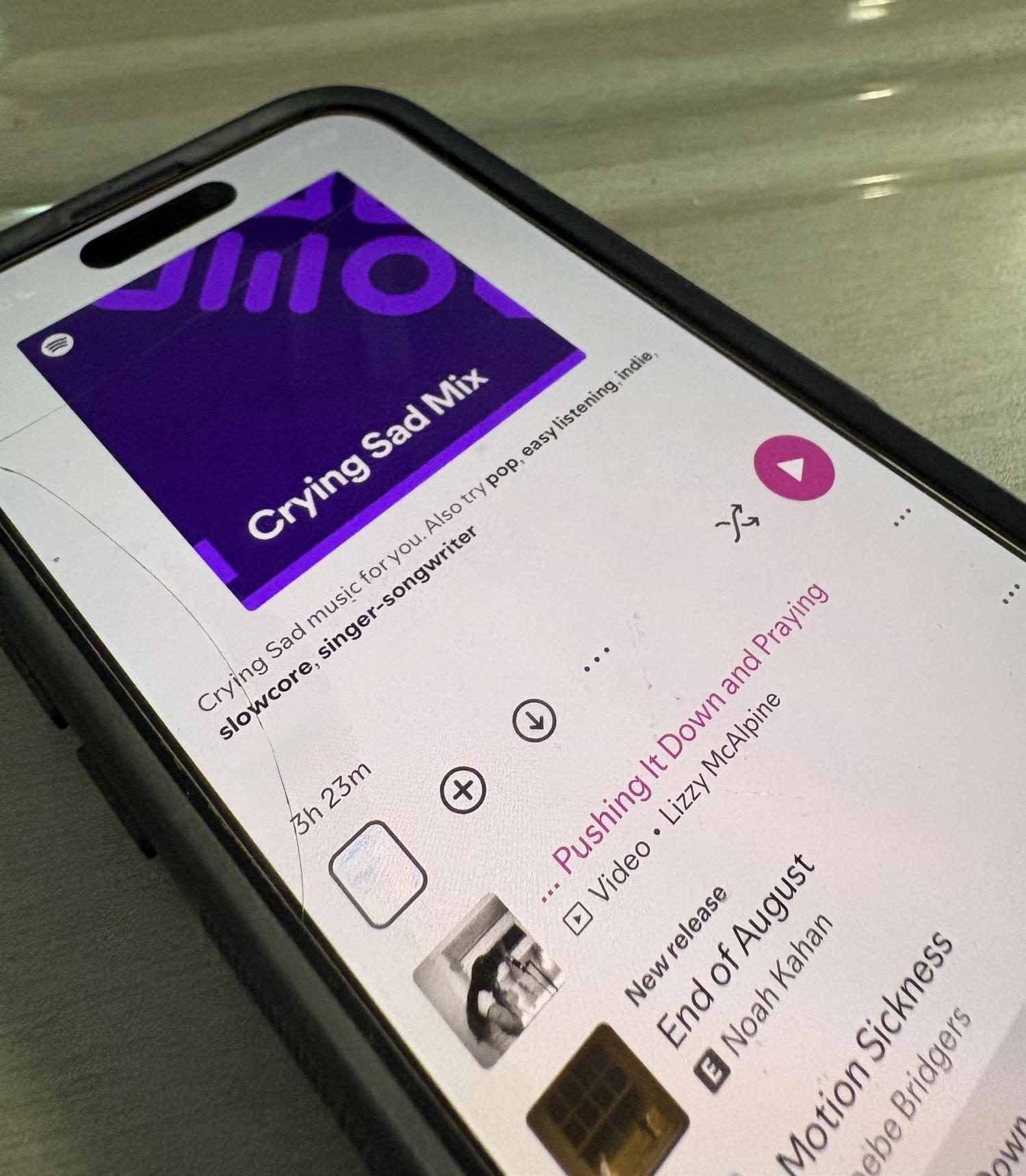
Usually, we spend our lives trying to make them the happiest that we can. We chase good grades, social highs and good vibes. So why is it that the most popular songs on our playlists are the ones that make us want to stare out of a car window and cry?
For some students, the answer lies in the sense of agency that music provides. Unlike the unexpected stress of a pop-quiz or a falling out with a friend, a sad song is a choice, a way to invite a specific feeling rather than being blind-sided by it.
“With a song, you can control the sadness compared to just a bad day in general,” said freshman Olivia Hammel.
By hitting play on a melancholic track, students aren’t necessarily looking to stay down; they could simply be looking for a way to process their situation on their own terms. In a high-pressure school climate where teenagers sometimes feel like they have very little control over their schedules or their futures, the play button offers a rare moment of sovereignty over their internal worlds.
However, this musical choice does more than just organize a teenager’s private thoughts; it can act as a private translator for the heavy emotions that students sometimes carry that are too complex to bring into a conversation.
“[Listening to sad music] is like sharing your feelings without having to say it out loud,” said freshman Lana Briscoe.
Sad music can provide a sanctuary where variability doesn’t have a script. It allows for a sense of community knowing that an artist like Mitski, Billie Eilish or even Lizzie McAlpine has felt the exact same weight as some teens who have carried their emotions for too long.
Ultimately, the rise of sad music isn’t about wallowing; it’s about finding the melody for the unspoken, proving that even in our quietest, most melancholic moments, we are never truly alone.