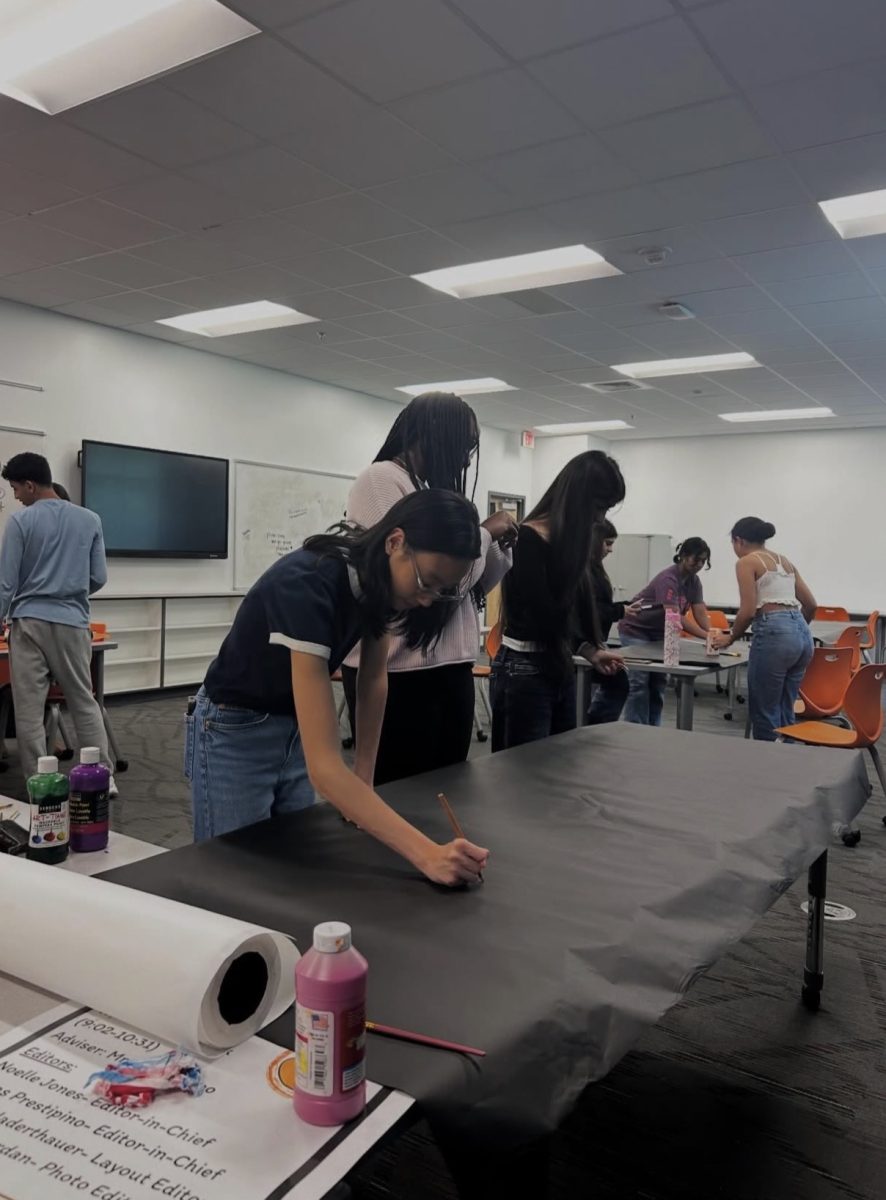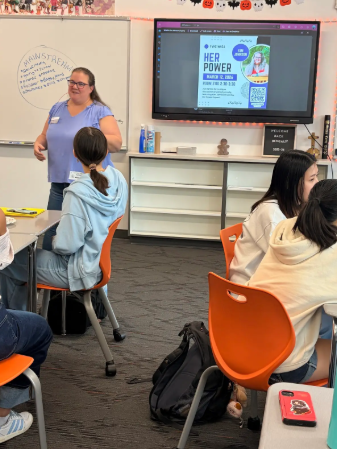
On March 12, WHOA club hosted a meeting focused on raising awareness about period poverty and menstrual health. The meeting took place in room 2110 from 2:30 to 3:30 p.m. and featured guest speaker Kim Johnson from the Her Power Project, who spoke about menstrual health, access to hygiene products and the impact of period poverty in communities.
The meeting was organized by the WHOA members to help inform young women about an issue that often goes unspoken. Period poverty refers to the lack of access to essential menstrual products. While many people may not think about it, the cost of these products can be a challenge for some individuals and families, especially when they are needed every month.
During the meeting, Johnson introduced the work of the Her Power Project and explained how the organization helps address this issue. The organization focuses on providing menstrual products to people who need them while also raising awareness about menstrual health. By partnering up with schools, organizations and community groups, the project works to ensure that more people have access to basic hygiene supplies.
“I hope students take away what a big issue period poverty is. It seems so far away, but there are kids in this school who rely solely on the donation we get just for basic hygiene products. People need these things to be able to work and go to school and so much more. Making these things accessible is so incredibly important, and I really hope it raises awareness of how close it is to home for us,” said junior Ipsi Karnam, one of the WHOA members.
Johnson discussed how period poverty can affect students and their education. Without access to menstrual products, some students may feel uncomfortable or may even miss school. This can create additional challenges when it comes to keeping up with school work or participating in activities. Through education and community support, organizations like Her Power Project aim to reduce these barriers and make menstrual health resources more accessible.
Students who attended the meeting had the opportunity to learn more about the issue and ask questions. The discussion is intended to help students better understand the challenges associated with period poverty and the work organizations are doing to address it. It will also provide insight into how communities can support efforts to expand access to menstrual products.
“Conversations about menstrual health in schools are crucial because they help students understand their bodies and reduce stigma around a part of health that women face,” said sophomore Daksha Ravva.
WHOA members hope that meetings like this one will encourage students to think more critically about issues that affect people both locally and globally. By inviting guest speakers and creating spaces for discussion, the club aims to empower young women with knowledge and inspire them to become more involved in community efforts.
“It is important for women to know that they’re not alone in this,” said sophomore Diya Krishnan Karthikeyan.
The meeting was open to students who are interested in learning more about menstrual health awareness and the efforts being made to reduce period poverty.