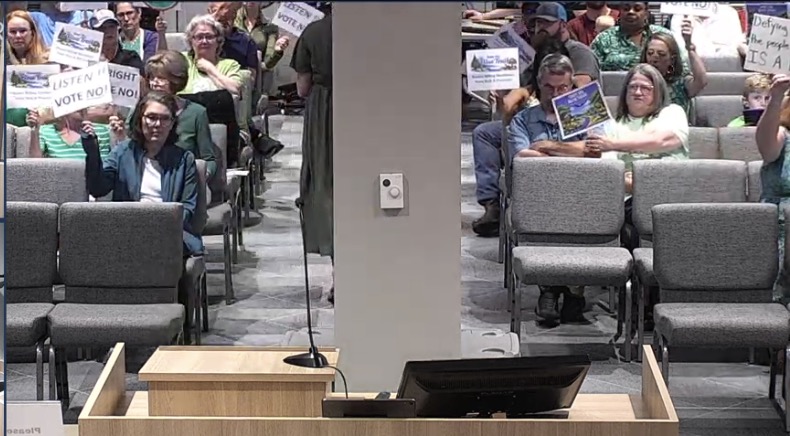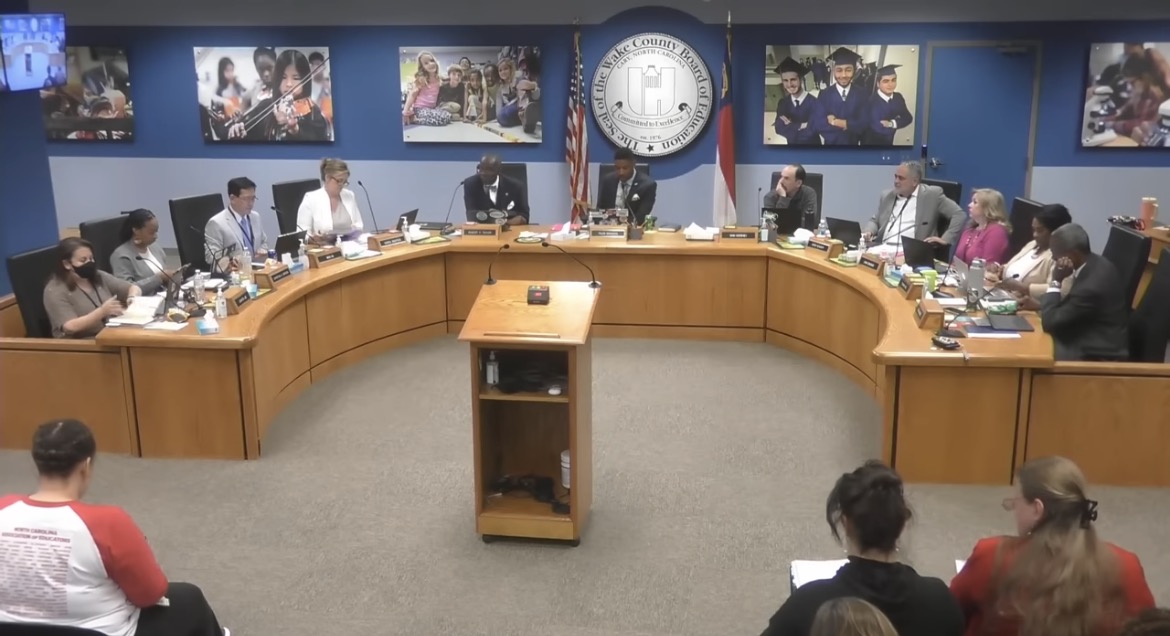
On Tuesday, April 21, 2026, the Wake County Board of Education conducted a public hearing to connect with teachers and understand their needs in terms of budget spending with special education, along with passing an amendment to the Lexia contract, which will assist in support of new teachers coming from outside the state.
Sarah Shiflett is a special education resources teacher from Knightdale Elementary School. She said, “Cuts are unacceptable. Wake County can afford a .015% property tax to secure the funding necessary to stabilize our precarious SPED departments. Our community is willing to support where the state falls short and our kids deserve nothing less than our best effort to fund our schools.”
This sentiment is shared across most of the teachers who were present. All of those who work in the special education field feel that they are under-compensated for their time spent. Later on in the meeting, Superintendent Dr. Robert P. Taylor addressed concerns that the board had made cuts to educational spending which he explained was untrue. Along with this, he announced that there are plans from the board to allot $10 million in the budget to progress support in special education.
Jackie Dodge, a parent with a kindergartener and child of younger age, said, “I feel compelled to express my strong support for discontinuing the Chromebook model, particularly at the elementary level, not only for a much-needed cost-savings and reallocation of those needed funds, but for the well-being and academic success of our students. Research finds that higher overall screen exposure is associated with lower performance in reading and math as well as weaker executive functioning skills and attention spans.”
The board then moved on to passing an amendment to the Lexia contract. The contract states that financing will go to LETRS Professional Learning and its newly-hired teachers, as long as they have not come from another school district. There was no discussion on the passing of this amendment, as it had been unanimously approved by the board.
The meeting was heavily centered on the opinions of the public, who were very vocal about their concerns about special education and its funding. The responsibility has seemingly fallen out of the state level and into county hands, thus calling a discussion on what the people need from them and to determine what needs support before continuing on.